
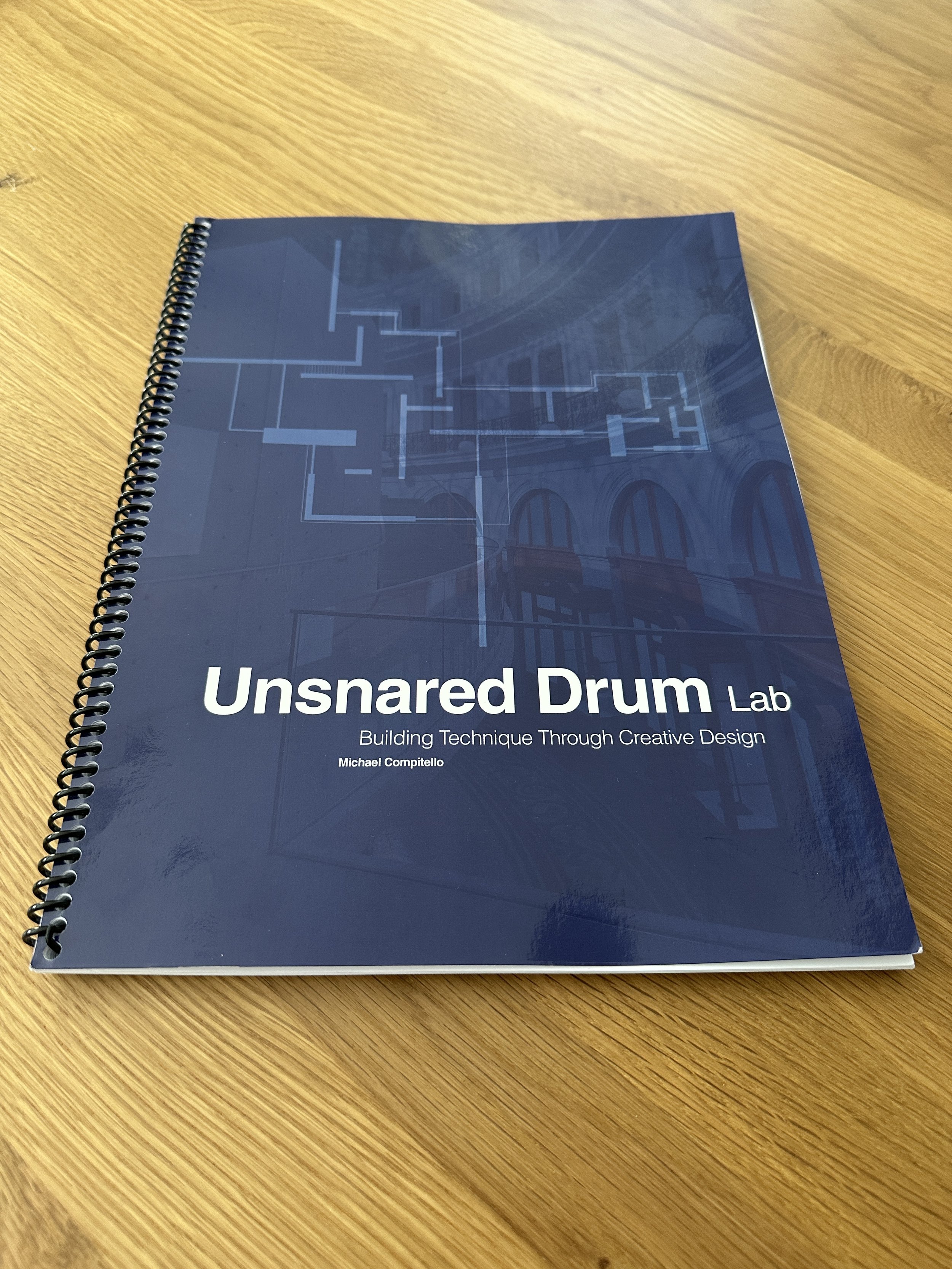
Unsnared Drum Lab
Build the technique you need for the music you want to play.
Michael Compitello’s Unsnared Drum Lab is a book about creative practice masquerading as a snare drum book.
It uses the snare drum as a laboratory for learning how to diagnose problems, invent solutions, develop greater independence, and perform better under pressure.
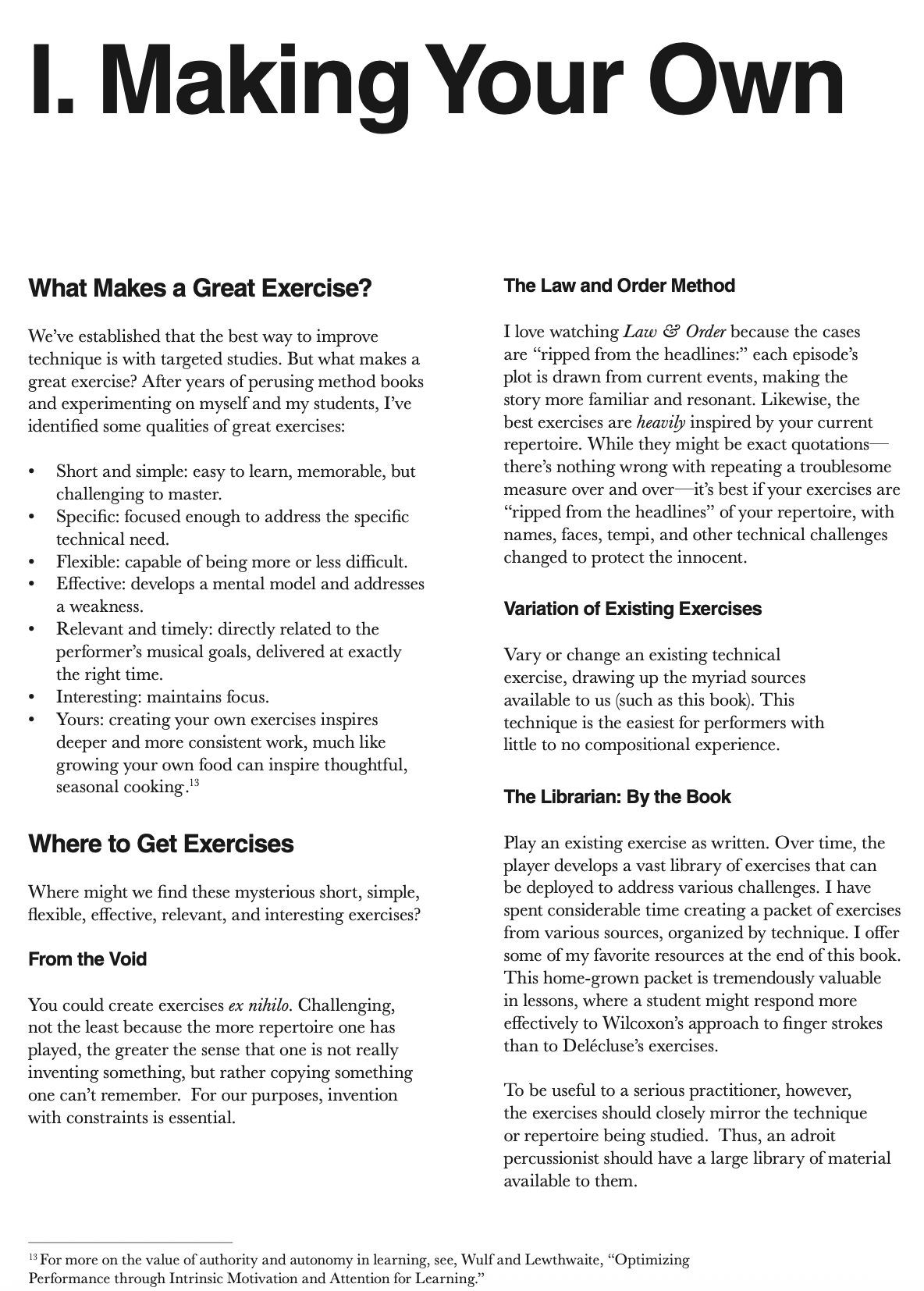
Creativity in the practice room is the best way to get better.
Most technique books do an excellent job of teaching musicians what to practice.
Unsnared Drum Lab asks a different question:
How do musicians design a custom-fitting musical technique, learn music more effectively and independently, and perform better under pressure?
Rather than presenting another sequence of technical studies, Unsnared Drum Lab teaches a creative, research-informed process for musical development. Musicians learn to diagnose musical problems, invent and refine materials to address those issues, evaluate their effectiveness, and continually adapt their practice as their repertoire and artistic goals evolve.
The book's goal is to help musicians become thoughtful, independent artists capable of directing their own development throughout their careers.
What will Unsnared Drum Lab help you do?
Learn music more effectively.
Perform better under pressure.
Drawing on research into learning, memory, creativity, and performance, as well as the creative working habits of professional musicians, Unsnared Drum Lab helps you develop the skills to direct your own musical growth.
You will learn to:
Diagnose technical and musical problems;
Design your technical development around the music you want to learn and perform.
Practice creatively rather than relying solely on repetition;
Evaluate whether your practice is working;
Seek, understand, and respond to feedback;
Transfer ideas across instruments and musical situations;
Plan your learning across weeks and months; and
Build flexible systems that evolve with your needs.
Most importantly, the book encourages you to see creativity not as a special talent, but as a practical skill you can use every day.
Become your own teacher.
Oh, and it’s also a path-breaking collection of snare drum studies designed to build technique, expand your musical imagination, and deepen your relationship with the instrument.
A snare drum method, creative practice manual, and learning toolkit in one.
-
Learn to diagnose problems, define musical goals, and use design thinking, variation, improvisation, and creative constraints to build a custom-fitting technique that evolves with your repertoire and artistic needs.
-
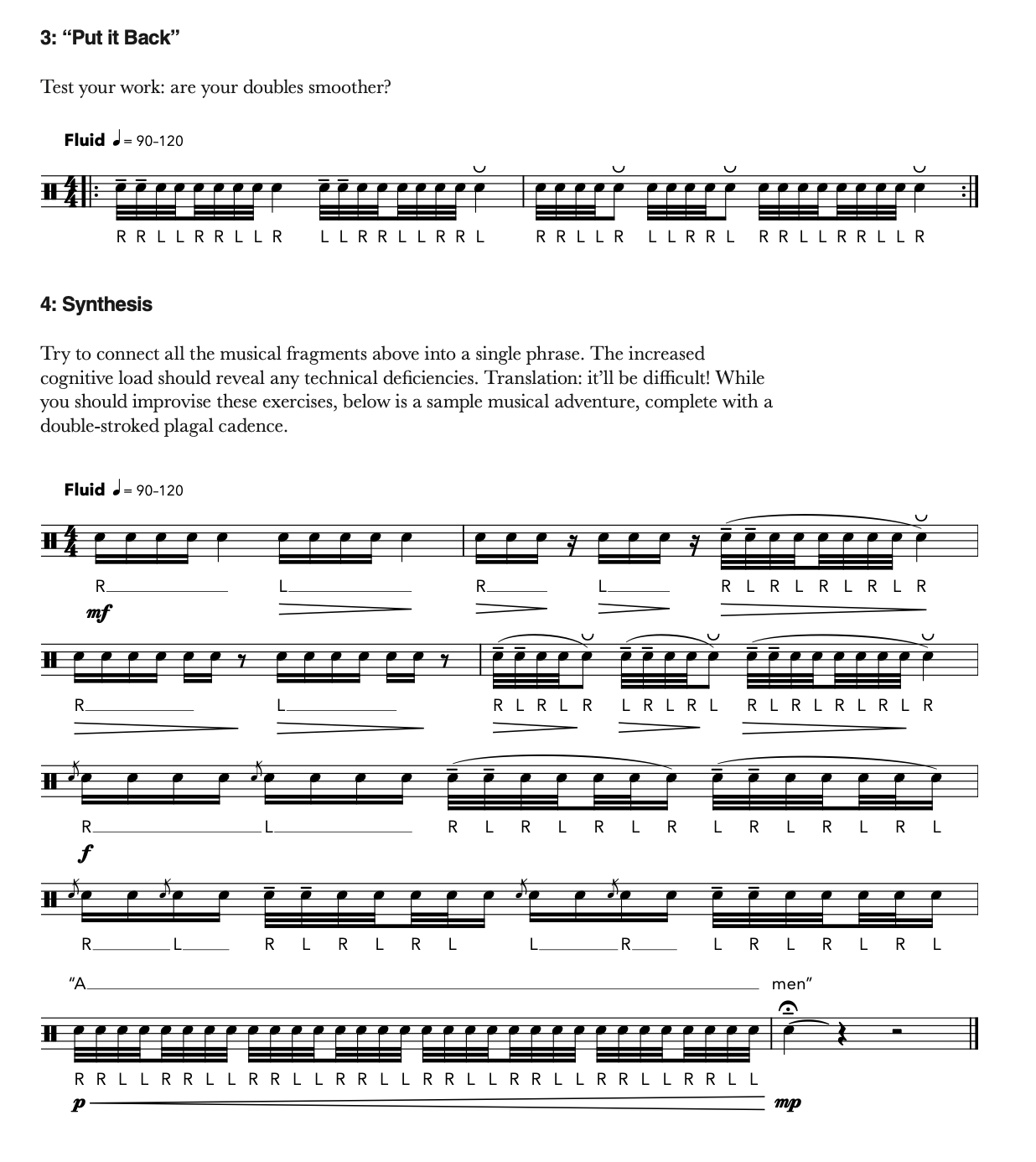
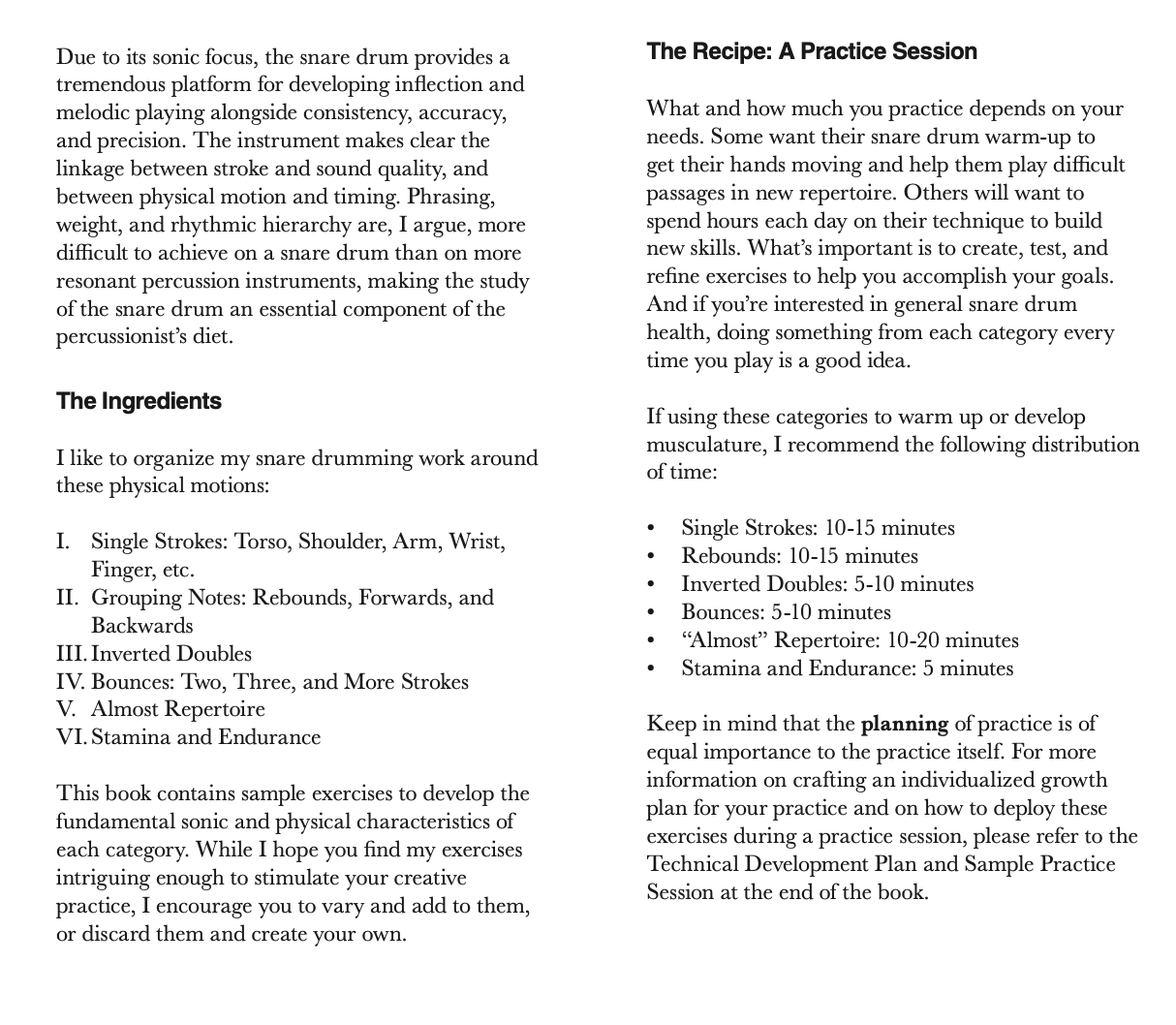
Original and adaptable studies address single strokes, rebounds, inverted doubles, rolls and bounces, grace notes, stamina, and endurance. Throughout, practical tips help you develop flexible, reliable technique that holds up under pressure.
-
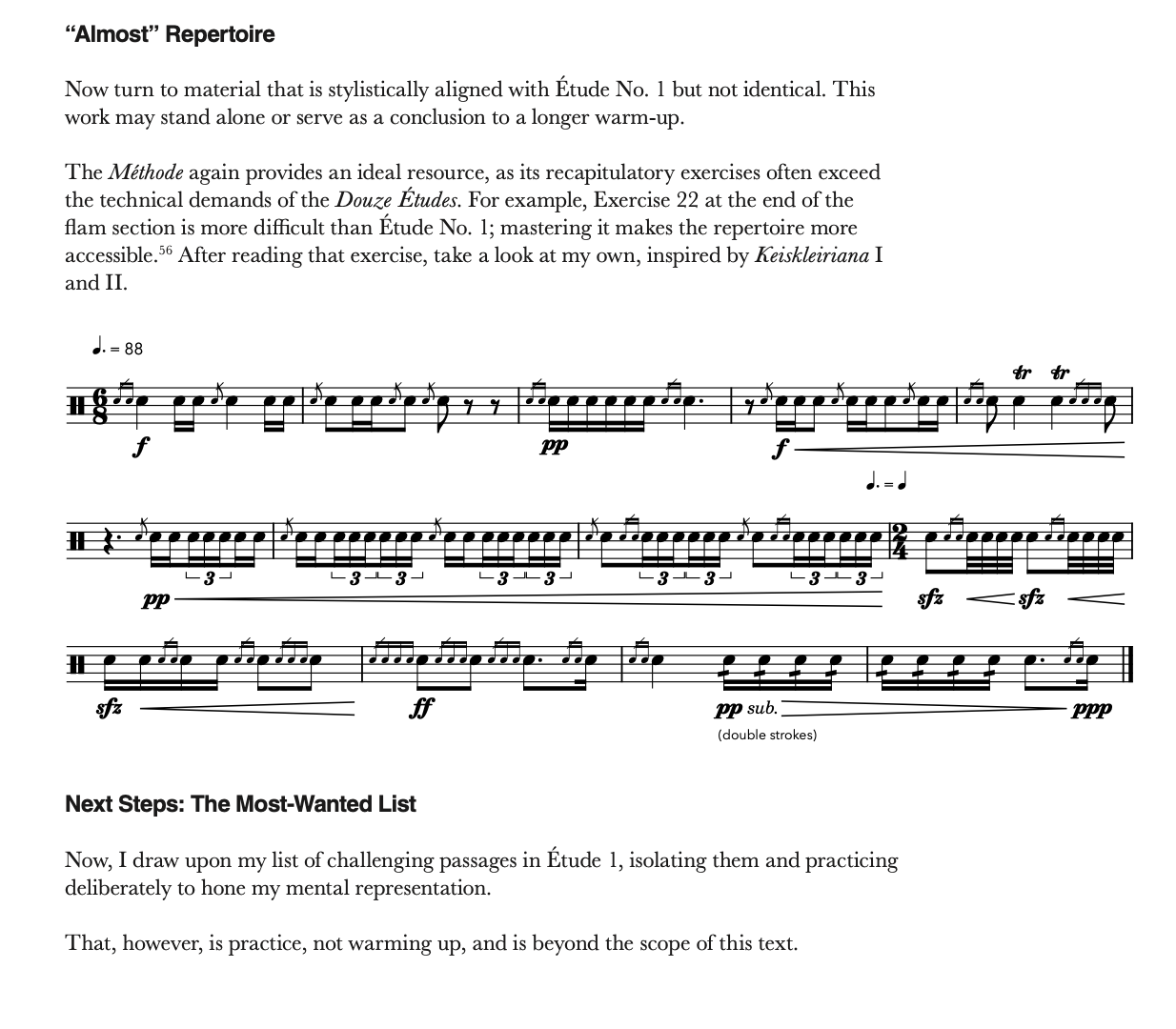
Explore historically significant snare drum texts and repertoire, then use them as sources for interpretation, technical development, borrowing, adaptation, and invention. The book’s “Almost Repertoire” studies bridge the distance between isolated technical exercises and the musical demands of performance.
-
Accessible introductions to ideas from cognitive science, motor learning, expertise, creativity, and performance psychology connect research with practical work at the instrument.
-
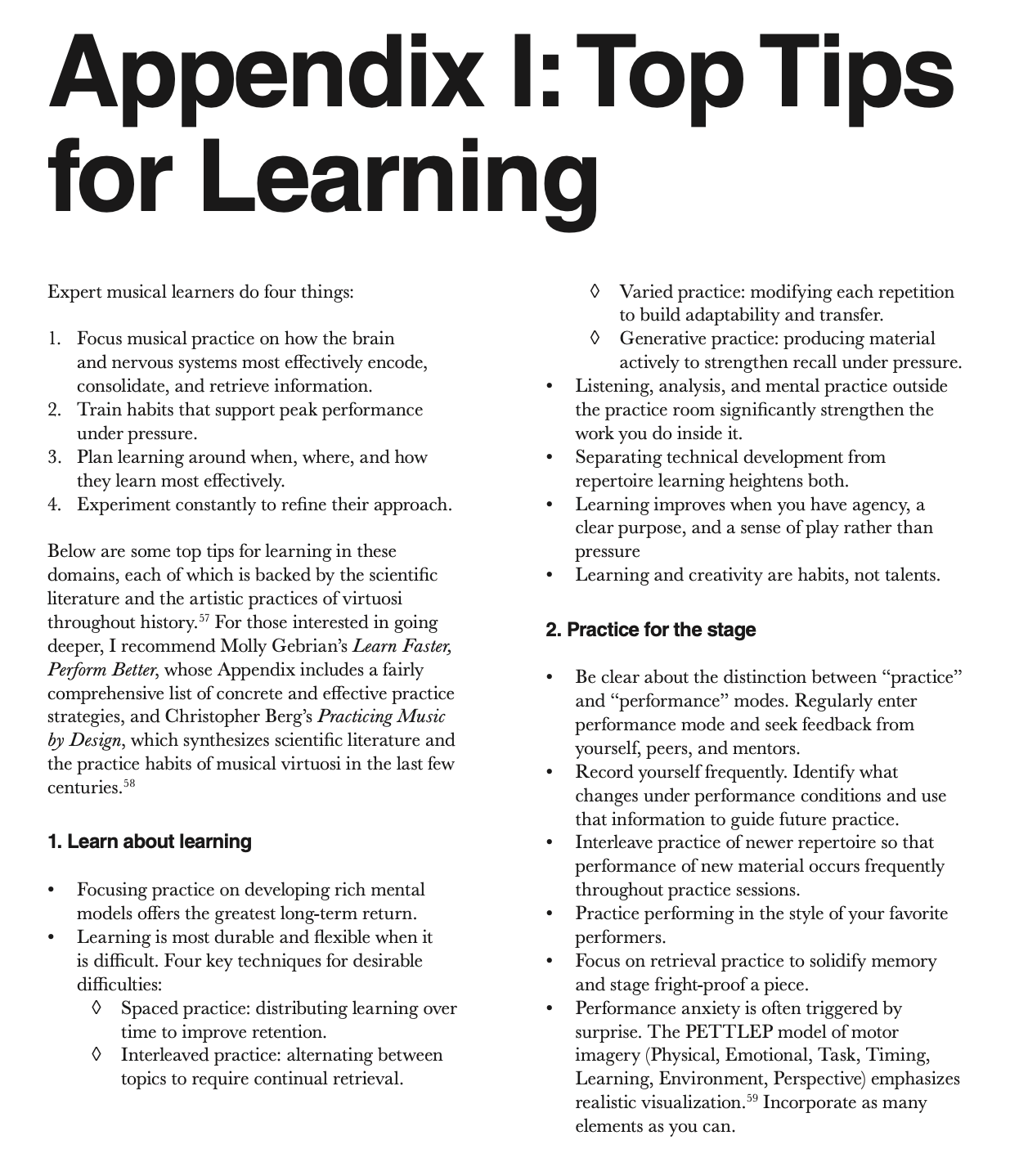
The appendices offer guidance for learning, structuring productive practice sessions, and planning technical growth over weeks and months.
💡 Throughout, the writing is clear, curious, and witty—serious about musical development without taking the joy out of practicing.
You can work through the book as a method, draw from it as a collection of studies, or return to it whenever you need a new way through a musical or technical problem.
How does it work?
Design, don’t repeat.
Unsnared Drum Lab combines the creative habits of composers and improvisers with the iterative process of design thinking.
The process follows a flexible cycle:
-
Diagnose what is getting in the way
-
Borrow, adapt, or invent an intervention
-
Listen closely, record yourself, and compare the result with your musical intention.
-
Keep the solutions that work and practice them until their effects are durable.
-
Understand why something worked, investigate what didn’t.
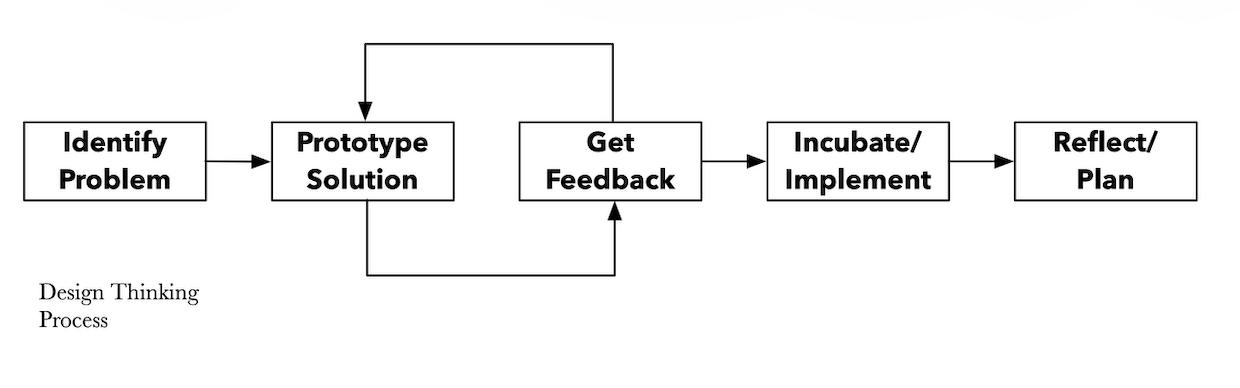
With practice, this process becomes increasingly intuitive. You learn to diagnose and respond to problems in real time, building a custom-fitting technique—and a creative practice system—that evolves with your repertoire, your body, and your artistic goals.
Why the snare drum?
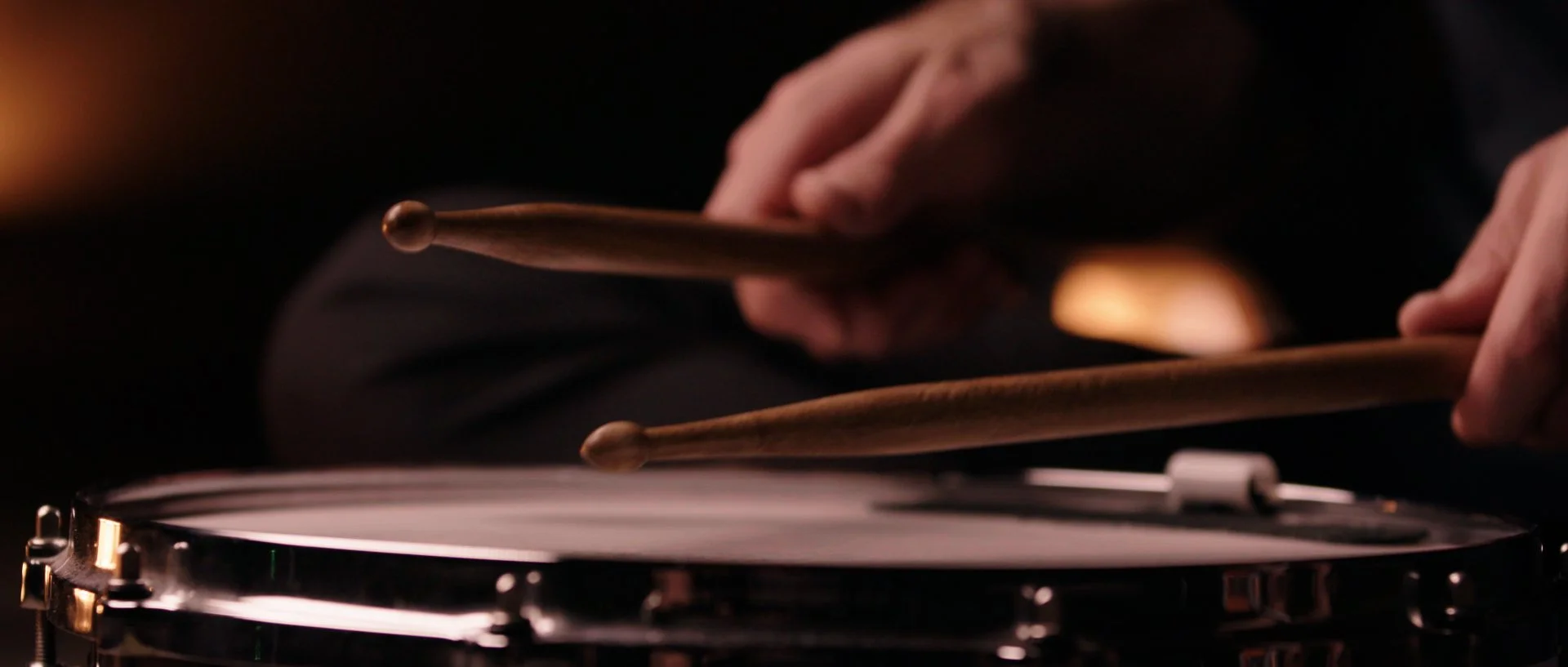
The snare drum serves as the laboratory: its directness and sensitivity make the relationships among movement, sound, timing, touch, and musical intention especially clear.
But the book’s principles concern how musicians learn, not simply what percussionists play. They extend naturally to marimba, timpani, drum set, multiple percussion, chamber music, and many other musical contexts.
At the end of the day, it’s also a rich and deep snare drum book, full of original studies, creative variations, connections to canonical repertoire, and practical strategies for developing sound, control, flexibility, and musical imagination.

What People Are Saying

Teaching with Unsnared Drum Lab
Empower students between lessons. Make more of the time you have together.

Unsnared Drum Lab is a plug-and-play creative practice curriculum that helps students diagnose problems, design their technical development, learn more effectively, perform better under pressure, and become their own best teachers.
It complements the repertoire, methods, and teaching traditions already central to your studio. Use one prompt in a lesson, assign one chapter, build a studio-class discussion around one concept, or incorporate the book into a larger unit.
The goal is not to replace the teacher. It is to help students become more thoughtful, creative, and resourceful when the teacher is not in the room.
Five easy ways to use the book with your students
-
Use the book’s Diagnostic Checklist to turn a vague frustration into a specific musical or technical problem. Then ask the student to prototype several possible solutions, test them immediately, and retain, revise, or discard each approach based on feedback.
-
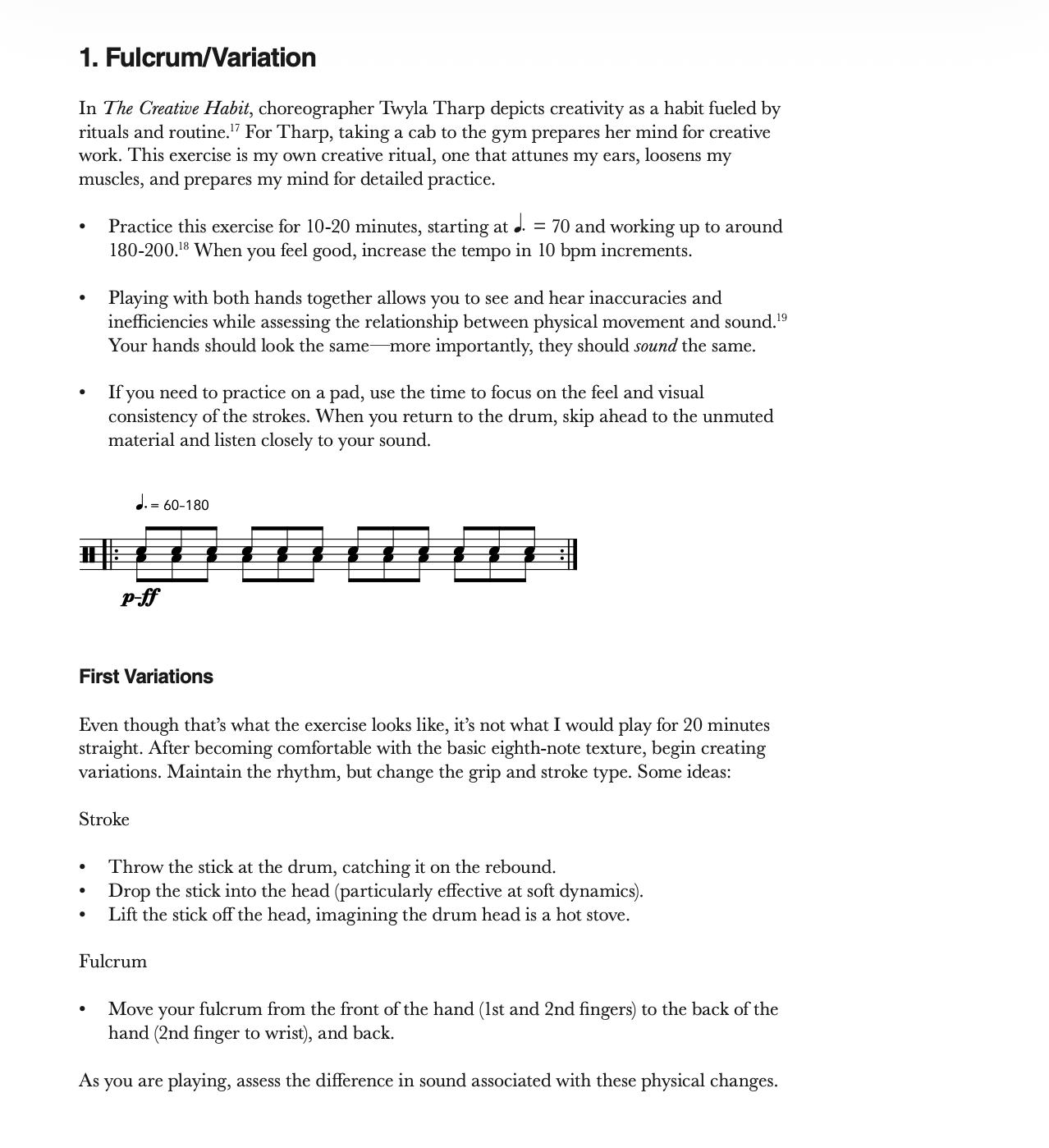
Begin with Fulcrum/Variation, the first exercise in the Single Strokes chapter. Keep the rhythm constant while changing one physical variable at a time, helping students build a richer mental model of the relationships among movement, sound, touch, and musical intention.
-
Ask students to sample studies from across the book—or investigate one technical chapter deeply—then select, adapt, and organize the small number that best addresses their current repertoire, body, and musical goals.
-
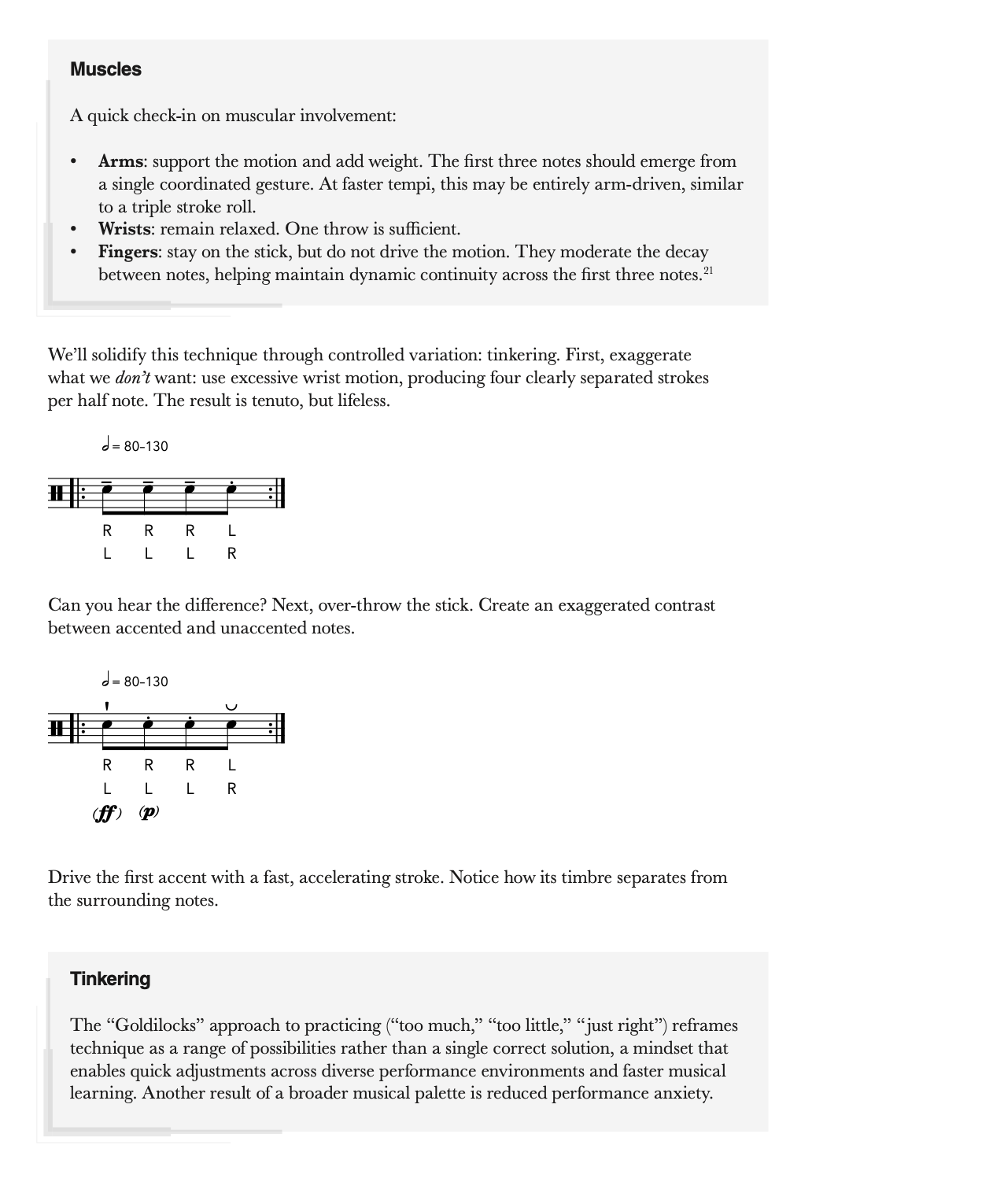
Choose one difficult passage. Remove layers of difficulty to clarify its essential idea, exaggerate one challenge to expand the student’s capacity, and then return to the original repertoire to discover what has changed.
-
Use the book’s planning materials to identify strengths, recurring problems, technical priorities, resources, schedules, and benchmarks. Review the plan regularly, track progress over weeks rather than days, and revise it as the student’s needs evolve.
Want the complete teaching prompts? See Unsnared Drum Lab teaching resources.
-
No. Send a student to the book when they encounter a specific issue. Begin with a single chapter or one passage from their repertoire. Read the material, or jump directly into the exercises.
What makes this book different?

Traditional methods offer indispensable exercises, études, and technical sequences. Unsnared Drum Lab helps students use those resources—and their own repertoire—more intentionally.
Instead of asking students merely to complete material, the book gives them a repeatable process for diagnosing a problem, designing and testing an intervention, responding to feedback, and transferring what they learn.
The book supplies a process students can carry from Stone, Wilcoxon, Delécluse, Cirone, Peters, or any other method into the repertoire they are preparing now.
What will students gain?
More effective learning, more reliable performance, and greater independence.
Students learn to:
explain what they are trying to improve and why;
turn challenges in their repertoire into targeted technical work;
connect physical choices with musical intentions;
use variation, constraint, and invention to deepen learning;
seek, understand, and respond to feedback;
recognize and address the gap between practice and performance;
transfer ideas among pieces, instruments, and musical situations; and
plan and direct more of their own long-term development.
Students arrive at lessons with clearer questions, better information, and more ideas about what to try next.
The reason to teach it
Students will continue to encounter unfamiliar repertoire, changing artistic goals, and technical problems long after formal study ends. Unsnared Drum Lab helps them prepare for that reality.
It teaches more than what to practice. It teaches students how to think when they do not yet know what to practice.